

5 Best Eco-Friendly Materials for Hoodies
Last Updated: November 2, 2026
Quick Summary
The most eco-friendly materials for hoodies are organic cotton, recycled cotton, hemp, TENCEL™/lyocell and recycled polyester. Each cuts a different kind of impact, so the right pick depends on whether you want softness, durability, warmth or performance. Check for a named certifier rather than trusting a green label.
- Organic cotton is the softest, most familiar starting point for a first sustainable hoodie.
- Recycled cotton fibres are shorter, so most hoodies blend them to hold their shape.
- Hemp is genuinely strong and softens with washing, but feels coarse on day one.
- Lyocell is made from wood pulp in a closed-loop process that recovers most solvent.
- Recycled polyester still sheds microfibres, so buy it for durability, not perfection.
Table of Contents
- Why the Best Fabric for Hoodies Starts With What It Is Made From
- 1. Organic Cotton: The Soft, Familiar Choice
- 2. Recycled Cotton: Giving Fibre a Second Life
- 3. Hemp: Tough, Natural and Built to Last
- 4. TENCEL™ and Lyocell: Smooth Fibres From Wood Pulp
- 5. Recycled Polyester Hoodies: Performance Without New Plastic
- How to Spot Genuine Organic Cotton Hoodies
- Which Material Fits Your Wardrobe?
- Frequently Asked Questions
Why the Best Fabric for Hoodies Starts With What It Is Made From
The most eco-friendly materials for hoodies are organic cotton, recycled cotton, hemp, TENCEL™/lyocell and recycled polyester. Each cuts a different kind of impact, and the right pick depends on whether you want softness, durability, warmth or performance. Below, we break down all five materials, the trade-offs nobody mentions, and how to check that a “green” hoodie label is telling the truth.
Hoodie fabric is not a minor detail. It decides how the garment feels on day one, how it survives year three, and how much environmental cost sits behind it. A heavy cotton fleece and a recycled polyester knit can look identical on a rail and behave completely differently in the wash.
That gap is where most shopping decisions go wrong.
How We Picked These Five Materials
We judged each material on four things: fibre origin, how it wears over time, how it feels next to skin, and how easy it is to verify the sustainability claims. Only materials that score reasonably on all four made the list.
We left out fabrics that are widely marketed as green but hard to substantiate, and we flagged the weak points of the ones that stayed. A material being natural does not automatically make it better, and a synthetic being recycled does not automatically make it worse.
1. Organic Cotton: The Soft, Familiar Choice
Organic cotton is the safest starting point for anyone buying their first sustainable hoodie. It grows without the synthetic pesticide load of conventional cotton, and it feels like the hoodie you already own, just with a cleaner supply chain behind it.
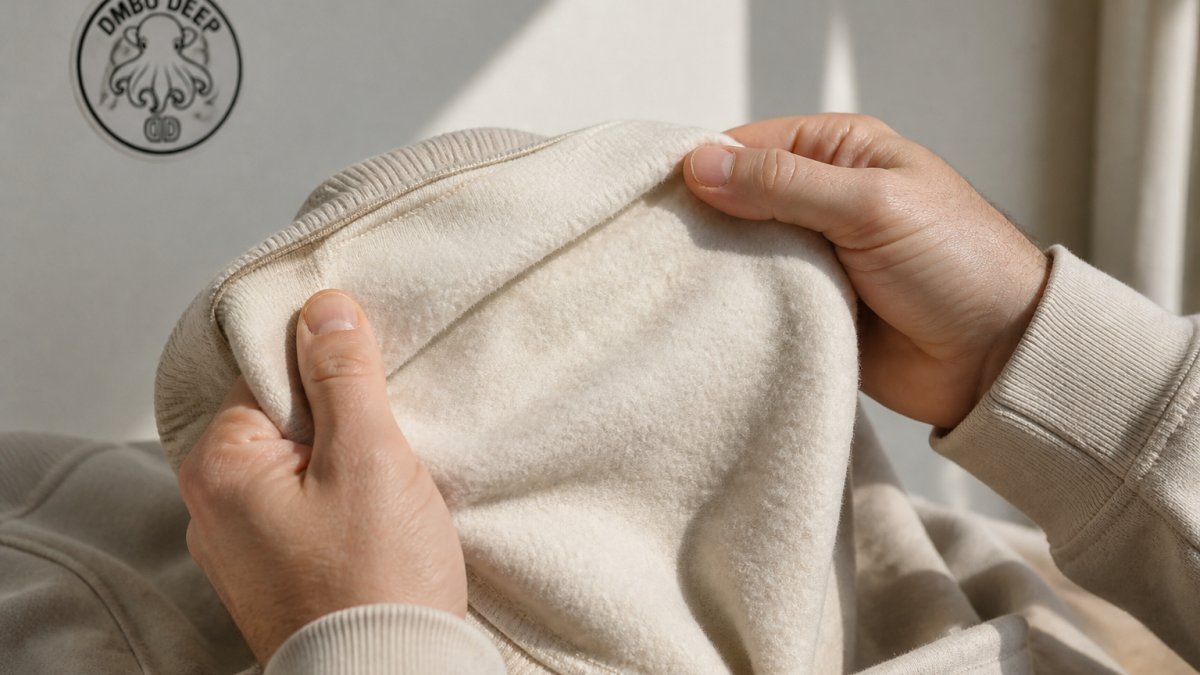
The Soil Association’s guidance on organic textiles explains what organic certification actually covers, from seed to finished garment. That matters, because “organic” on a swing tag means nothing without a certifier behind it.
Pros: soft, breathable, dyes well, familiar fit, widely certified.
2. Recycled Cotton: Giving Fibre a Second Life
Recycled cotton turns post-industrial and post-consumer cotton waste back into yarn, which keeps textile scraps out of landfill and reduces the demand for newly grown fibre.
The catch is strength. Recycled cotton fibres are shorter than virgin ones, so most hoodies blend them with organic cotton or recycled polyester to hold their shape. A 100% recycled cotton hoodie exists, but it usually feels lighter and less structured.
Pros: diverts waste, lowers demand for new cotton, often cheaper than fully organic.
Cons: shorter fibres mean lower durability unless blended, and colour consistency varies between batches.
3. Hemp: Tough, Natural and Built to Last
Hemp is the hard-wearing option. It is a fast-growing plant that needs little in the way of pesticides, and the fibre it produces is genuinely strong, which is why hemp blends outlast softer cottons over years of wear.
It also breathes well and softens with washing. The honest drawback is the hand-feel on day one: hemp is rougher than cotton until it has been worn and washed a few times.
Pros: durable, low-pesticide crop, breathable, softens over time.
Cons: coarser initial texture, fewer off-the-peg hoodie options, and it creases.
4. TENCEL™ and Lyocell: Smooth Fibres From Wood Pulp
Lyocell is a regenerated cellulose fibre made from wood pulp in a closed-loop process that recovers most of the solvent used. TENCEL™ is the branded version, and it is the one to look for if you want proof of the process.
The result is a fibre that drapes smoothly, feels cool against skin and takes dye well.
Pros: smooth, moisture-managing, closed-loop production, blends beautifully with cotton.
Cons: comes from wood pulp so forest sourcing matters, and pure lyocell hoodies are rare.
5. Recycled Polyester Hoodies: Performance Without New Plastic
Recycled polyester, often called rPET, is made from post-consumer plastic bottles. In a hoodie it delivers warmth, shape retention and quick drying that natural fibres struggle to match.
The nuance most guides skip: recycled polyester still sheds microfibres in the wash. It reduces demand for new plastic, but it does not eliminate plastic pollution. Buy it for performance and durability, not as a perfect solution.
Pros: durable, warm, holds shape, keeps plastic out of landfill.
Cons: microfibre shedding, and quality varies hugely by certification.
How to Spot Genuine Organic Cotton Hoodies
Three checks take under a minute:
- Does the label name a certifier, not just say “organic”?
- Is there a licence or certificate number you can search?
- Does the brand explain where the fibre is grown and who makes the garment?
For a deeper look at whether the premium is justified, read our guide on whether organic cotton is worth it for streetwear, and if you want to test a brand’s claims properly, our breakdown of how to identify greenwashing in clothing gives you ten checks to run.
Which Material Fits Your Wardrobe?
Match the material to how you actually wear the hoodie. There is no single best fabric for hoodies, only the best one for your habits.
| Material | Best For | Main Strength | Main Drawback |
|---|---|---|---|
| Organic cotton | Everyday wear, sensitive skin | Softness and breathability | Water use in growing |
| Recycled cotton | Budget-conscious buyers | Diverts textile waste | Shorter fibres, needs blending |
| Hemp | Long-term durability | Strength and low pesticide use | Coarse at first |
| TENCEL™/lyocell | Layering, warm climates | Smooth drape, closed-loop process | Wood sourcing scrutiny |
| Recycled polyester | Cold weather, gym, travel | Warmth and shape retention | Microfibre shedding |
If you are building a full wardrobe rather than buying one piece, our guide to building a sustainable streetwear wardrobe maps out where each fabric fits.
Frequently Asked Questions
What is the most eco-friendly material for a hoodie?
There is no single winner. Organic cotton avoids the pesticide load of conventional cotton and stays soft, recycled cotton keeps textile waste out of landfill, and recycled polyester gives fleece a second life. The most eco-friendly choice depends on what matters most to you: natural fibres, recycled content, or durability that keeps the hoodie in use for years. A blend can balance softness with strength, which is why many brands mix organic cotton with recycled polyester.
Are organic cotton hoodies better than conventional cotton ones?
Organic cotton hoodies are grown without the synthetic pesticides used in conventional cotton farming, and the fibre is generally softer against the skin. The trade-off is that organic cotton still needs water and land to grow, so it is a lower-impact choice rather than a zero-impact one. Look for a certification label on the garment and check the blend percentage before you buy.
Are recycled polyester hoodies actually sustainable?
Recycled polyester hoodies use fibre made from recovered plastic, which keeps material out of waste streams and reduces demand for newly made polyester. The catch is that washing synthetic fleece can shed microfibres into water, so wash less often and use a filter bag where you can. Recycled polyester also tends to hold its shape and resist creasing well, which makes it a practical choice for everyday streetwear.
How can I tell whether a hoodie is made from sustainable materials?
Check the care label first: it lists the fibre content and blend ratios, so you can see whether organic cotton or recycled polyester is actually present. Then look for third-party certifications on the swing tag, such as GOTS for organic cotton or GRS for recycled content. Finally, check the brand’s own material page. A brand that names its fibres and sourcing openly is easier to trust than one that only uses the word sustainable.
Which hoodie materials are easiest to care for?
Recycled polyester fleece and organic cotton and recycled polyester blends are the lowest maintenance: they resist creasing, hold their shape through repeat washes and dry quickly. Pure organic cotton is soft but can shrink if washed hot, so use a cool cycle and air dry. Hemp softens with every wash but needs a little more patience at first. Whatever the fibre, wash cool and line dry to keep the garment and its finish in good condition for longer.
The real challenge is not choosing a fabric. It is finding a brand that will tell you exactly what its hoodies are made from and stand behind it. That is the standard we hold ourselves to at DMBO DEEP: responsibly sourced organic and recycled materials, limited drops of just 250 pieces per design, and £2 from every item supporting ocean conservation and mental wellbeing. Get started with DMBO DEEP and wear something that carries both style and purpose.
