

The Real Benefits of Recycled Materials in Clothing
Last Updated: November 5, 2026
Quick Summary
Recycled materials in clothing are fibres recovered from waste textiles, plastic bottles and production offcuts, then spun into new fabric. They keep textile waste out of landfill, conserve virgin resources and usually lower the carbon footprint of fibre production, though benefits depend on the fibre, recycling method and transport distance.
- Mixed-fibre garments are harder to recycle, so single-fibre construction makes a garment genuinely recyclable again.
- Recycled polyester matches virgin polyester on strength but still sheds microfibres in the wash.
- Mechanically recycled cotton has shorter fibres, so it is often blended with virgin cotton or polyester for strength.
- Check the care label for a recycled fibre and percentage, plus GRS or RCS certification.
- Recycling is not infinite, and recycled content does not make a garment recyclable or biodegradable.
Table of Contents
- Why Recycled Materials in Clothing Matter More Than Ever
- The Environmental Benefits of Recycled Materials in Clothing
- What Fabrics Can Be Made from Recycled Materials?
- Recycled Polyester Pros and Cons
- The Trade-Offs Nobody Mentions: Durability, Shedding and End of Life
- How to Identify Recycled Fabrics in Clothing
- Buying Recycled Clothing That Actually Lasts
- Frequently Asked Questions
Why Recycled Materials in Clothing Matter More Than Ever
Recycled materials in clothing are fibres recovered from waste textiles, plastic bottles and production offcuts, then spun into new fabric. At DMBO DEEP, we use them because the case for change is difficult to argue with: fashion’s traditional path runs from raw material to wardrobe to bin, and that last step is the problem.
The conventional model is linear. Cotton is grown, polyester is made from oil, garments are sewn, worn briefly, then discarded. Every stage draws on finite resources and generates waste. Recycling interrupts that line by giving existing material a second life.
But first, here’s what most guides get wrong: they treat recycling as a free pass. It isn’t. Recycled fibres carry real trade-offs in durability, shedding and end-of-life, and a buyer who understands those trade-offs chooses better garments than one who simply trusts a green label.
Below, we break down the genuine environmental benefits, compare what each recycled fibre actually delivers, and show you how to spot a real claim from a marketing one.
WRAP’s Textiles 2030 initiative on clothing waste
The Environmental Benefits of Recycled Materials in Clothing
The benefits fall into three broad groups: waste reduction, resource conservation, and lower impact across fibre production. Each one is real, and each one has limits worth knowing.
Keeping Textile Waste Out of Landfill
Textile waste is one of the fastest-growing waste streams in the UK. Clothing that could be reworn, repaired or recycled instead goes to landfill or incineration, where its material value is lost permanently. Recycling captures that value.
Material recovery works best when garments are collected separately and sorted by fibre type. Mixed-fibre garments are harder to recycle because separating blended yarns is costly and often impossible at scale. That’s why single-fibre construction matters: a pure recycled polyester hoodie can be recycled again; a 60/40 blend usually cannot.
Conserving Natural Resources and Virgin Fibres
Every tonne of recycled fibre displaces virgin material. That means less land under cotton, fewer petrochemicals feeding polyester production, and less pressure on non-renewable resources. Resource conservation is the clearest, least contested benefit of recycled textiles.
The gain is largest where the virgin alternative is most resource-intensive. Recycled polyester avoids the oil extraction and energy-heavy polymerisation that virgin polyester requires. Recycled cotton reduces demand for fresh crop land and the water that goes with it.
Lower Energy, Water and Emissions Across Fibre Production
Mechanical recycling of textiles is generally far less energy-intensive than producing virgin fibre from scratch. The savings show up in energy consumption, water consumption and CO2 emissions, though the exact figure depends on the fibre, the recycling method and the transport distance.
Be sceptical of headline claims here. A recycled fibre shipped halfway around the world can lose much of its advantage. The honest position is that recycled materials usually lower the carbon footprint of fibre production, but “usually” is doing real work in that sentence.
Ellen MacArthur Foundation on circular fashion
What Fabrics Can Be Made from Recycled Materials?
Most common clothing fibres now have a recycled version, but they are not interchangeable. Each has a different feedstock, a different performance profile and a different set of recycling constraints.
Recycled polyester (rPET). The dominant recycled fibre in clothing.
Recycled cotton. Usually made from post-industrial cutting offcuts and, increasingly, post-consumer garments.
Recycled wool. The most mature recycled fibre: wool has been reclaimed, shredded (“shoddy”) and rewoven for well over a century. It retains warmth, loft and durability, and the fibre can be recycled several times before quality drops.
Recycled nylon. Typically regenerated from fishing nets, carpet and industrial waste through chemical depolymerisation back to caprolactam. Strength and abrasion resistance are close to virgin nylon, making it useful for outerwear and bags.
Recycled elastane. Technically possible but limited, because stretch fibres are hard to separate cleanly from blends and the chemistry of recovery is demanding.
Blended fibres. The hardest case.
| Fibre | Main feedstock | Performance | Recycling constraint |
|---|---|---|---|
| Recycled polyester | PET bottles, textile waste | Durable, colourfast, quick-drying | Open-loop bottle-to-fibre; microfibre shedding |
| Recycled cotton | Offcuts, worn garments | Soft, breathable | Shorter fibres; often blended; finite cycles |
| Recycled wool | Reclaimed knitwear | Warm, lofted, long-lasting | Limited supply; darker feedstock |
| Recycled nylon | Fishing nets, industrial waste | High strength, abrasion-resistant | Niche availability; thin collection |
| Recycled elastane | Stretch waste | Elastic recovery | Hard to separate from blends |
If you’re weighing recycled fibres against organic alternatives, our guide to whether organic cotton is worth it for streetwear compares the two on durability, feel and environmental cost.
Recycled Polyester Pros and Cons
Recycled polyester is the most common recycled fibre in clothing, and the most misunderstood. It’s durable, versatile and widely available, but it is still plastic, and that shapes its pros and cons.
Pros:
- Diverts plastic waste from landfill and waterways
- Lower energy and emissions than virgin polyester production
- Strong, colourfast and holds shape well in hoodies and joggers
- Easy to care for and quick to dry
Cons:
- Still sheds microfibres in the wash, like all synthetic fibres
- Not biodegradable, so end-of-life handling matters
- Quality varies widely between suppliers
- Depends on bottle collection infrastructure that isn’t universal
The honest verdict: recycled polyester is a genuine improvement on virgin polyester, not a perfect fibre. Buy it for durability and versatility, and wash it in a microfibre-catching bag to limit shedding.
| Fibre | Main Source | Key Strength | Main Limitation |
|---|---|---|---|
| Recycled polyester | Plastic bottles, textile waste | Durable, versatile | Microfibre shedding |
| Recycled cotton | Offcuts, worn garments | Soft, breathable | Shorter fibres, often blended |
| Recycled wool | Reclaimed knitwear | Warm, long-lasting | Limited supply |
| Recycled nylon | Fishing nets, industrial waste | High strength | Niche availability |
The Trade-Offs Nobody Mentions: Durability, Shedding and End of Life
Recycled isn’t automatically better, and the trade-offs deserve plain language and honest boundaries. The benefits are real, but they are conditional, they depend on the fibre, the recycling route, the transport distance and what happens to the garment after purchase.
Durability. Mechanically recycled cotton fibres are shorter, so yarn spun from them is weaker and fabric can pill or thin faster unless it is blended or tightly constructed.
Lifecycle evidence and its limits. Lifecycle assessments (LCAs) usually show recycled polyester with a lower carbon footprint than virgin polyester at the fibre-production stage, because it avoids oil extraction and energy-heavy polymerisation.
End of life and circularity. Recycling is not infinite, and recycled content does not make a garment recyclable, biodegradable or circular. Most textile recycling today is open-loop, a garment becomes insulation or wiping cloths rather than new clothing.
Verification. Recycled content claims are only as good as the chain of custody behind them.
That’s the honest picture. Recycled materials reduce impact; they don’t erase it. The biggest single lever remains the same as it always was: buy less, choose well, and wear it for years.
How to Identify Recycled Fabrics in Clothing
Start with the care label. UK law requires fibre composition to be stated as a percentage, so a genuine recycled claim should appear there, not just on a swing tag. Look for “recycled polyester” or “recycled cotton” with a percentage, and be wary of vague terms like “eco-blend”.
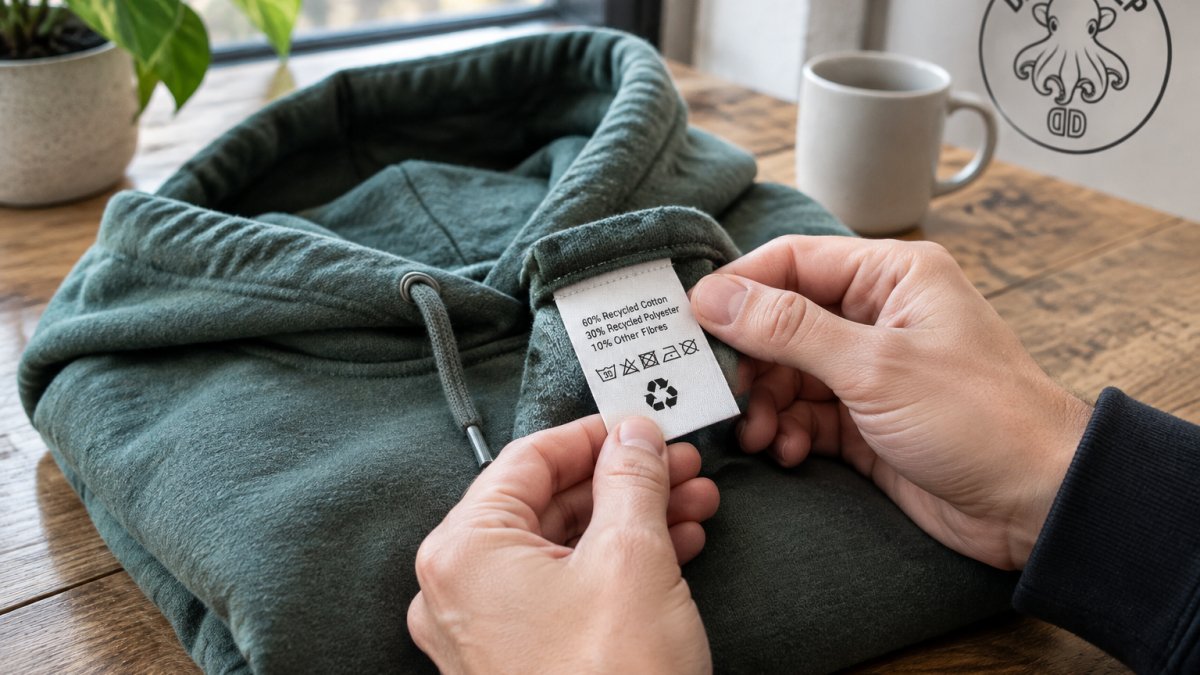
Then check for third-party certification. The Global Recycled Standard (GRS) and the Recycled Claim Standard (RCS) both verify recycled content through the supply chain, with GRS adding environmental and social criteria. A brand that has done the work will usually say so.
Three checks we’d run before trusting a label:
- Does the care label state a recycled fibre and a percentage?
- Is there a certification body named (GRS, RCS) or a traceable supplier?
- Does the brand explain where the material came from, or only that it’s “sustainable”?
If a claim fails all three, treat it as marketing until proven otherwise. For a deeper set of checks, read how to identify greenwashing in clothing, and if you want the full verification process, our guide to verifying sustainable fashion claims walks through it step by step.
Buying Recycled Clothing That Actually Lasts
Durability is where recycled clothing earns its place. A well-made recycled garment, worn and cared for properly, keeps material in use for years, which is the whole point of waste diversion. The trick is choosing construction over claims.
Look for dense fabric with a substantial hand-feel, reinforced seams at stress points, and a fibre blend that suits the job. Recycled polyester holds shape well in hoodies and joggers; recycled wool suits knitwear; recycled cotton works best blended for softness and strength. Wash cool, air dry where you can, and repair before replacing.
At DMBO DEEP, our limited-edition drops are capped at 250 pieces per design, made from responsibly sourced garments including organic and recycled materials, with eco-conscious packaging. A contribution from every item supports ocean conservation and mental wellbeing. Fewer, better pieces is the principle we build on, and it’s the same principle that makes recycled fibres worth choosing.
If you’re ready to put this into practice, our guide to building a sustainable streetwear wardrobe turns these ideas into a plan, and you can shop the collection to see which pieces are available now.
Frequently Asked Questions
What are the main benefits of recycled materials in clothing?
Recycled materials in clothing keep textile waste out of landfill and reduce demand for virgin fibres, which means fewer natural resources are extracted and less energy, water and chemical input goes into fibre production. Using post-consumer and post-industrial waste also supports a more circular economy, where material recovery replaces disposal. The gains vary by fibre and by how the garment is made, so treat recycled content as one strong factor among several, alongside durability and how often you will actually wear the piece.
Is it safe to wear clothes made from recycled materials?
Yes. Recycled polyester, recycled cotton and other recycled fabrics go through the same manufacturing and finishing stages as their virgin equivalents, so they are worn the same way. If you have sensitive skin, check the care label for fibre blend and wash new garments before wearing, as you would with any clothing. The more practical concern is quality: recycled fibres can be shorter, so look for well-finished seams and a fabric weight that suits how you plan to wear it.
Does recycled polyester actually reduce a garment’s environmental impact?
It can, but the size of the reduction depends on the source of the waste and the production route. Recycled polyester made from post-consumer plastic waste avoids some of the resource extraction and processing needed for virgin polyester, which is where much of the benefit sits. The trade-offs are real too: synthetic fibres can shed microfibres during washing, and not all recycled polyester is traceable. Look for documented recycled content rather than the word alone on a swing tag.
How can I tell whether a garment contains recycled materials?
Start with the care label: it should state the fibre composition, for example recycled polyester or recycled cotton, usually as a percentage. Then check for third-party certification or a traceability statement from the brand, since recycled-content claims are difficult to verify from the label alone. Be wary of vague wording such as eco-friendly fabric with no fibre breakdown. If a brand cannot tell you where its recycled fibres come from, treat the claim as unproven.
The challenge is simple: choose garments you’ll actually keep. DMBO DEEP exists for people who want premium streetwear with a purpose behind it, from strictly limited drops of 250 pieces to responsibly sourced recycled and organic fabrics and eco-conscious packaging, with a contribution from every item supporting ocean conservation and mental wellbeing. Get started with DMBO DEEP and wear something that lasts, means something, and won’t be seen everywhere.
