

Best Fabrics for Sustainable Men’s Joggers: 2026 Guide
Table of Contents
- What Makes a Fabric Truly Sustainable for Men’s Joggers?
- Organic Cotton vs Recycled Polyester for Joggers
- The Benefits of Tencel Lyocell in Streetwear
- How to Care for Sustainable Joggers So They Last
- How to Spot Greenwashing in Sustainable Men’s joggers
- Matching Fabric to Your Lifestyle and Values
- Conclusion: Choosing Fabrics That Align With Your Values
- Frequently Asked Questions
Last Updated: September 30, 2026
What Makes a Fabric Truly Sustainable for Men’s Joggers?
Sustainable men’s joggers start with a fabric whose full life cycle, from raw fibre to the end of its wearable life, limits harm to people and the planet. That means lower water and chemical use, reduced carbon emissions, ethical labour, and a realistic path to biodegradation or recycling.
The trouble is that “sustainable” has no legal definition in UK fashion marketing. So the label on the tag tells you very little on its own.
At DMBO DEEP, we build our joggers from responsibly sourced organic and recycled materials, and we treat that as a starting point rather than a finish line. This guide breaks down the fabrics worth your money, how they compare, and how to care for them so they last.
Below, we’ll show you exactly how to read a fabric label like someone who knows what they’re looking at.
Organic Cotton vs Recycled Polyester for Joggers
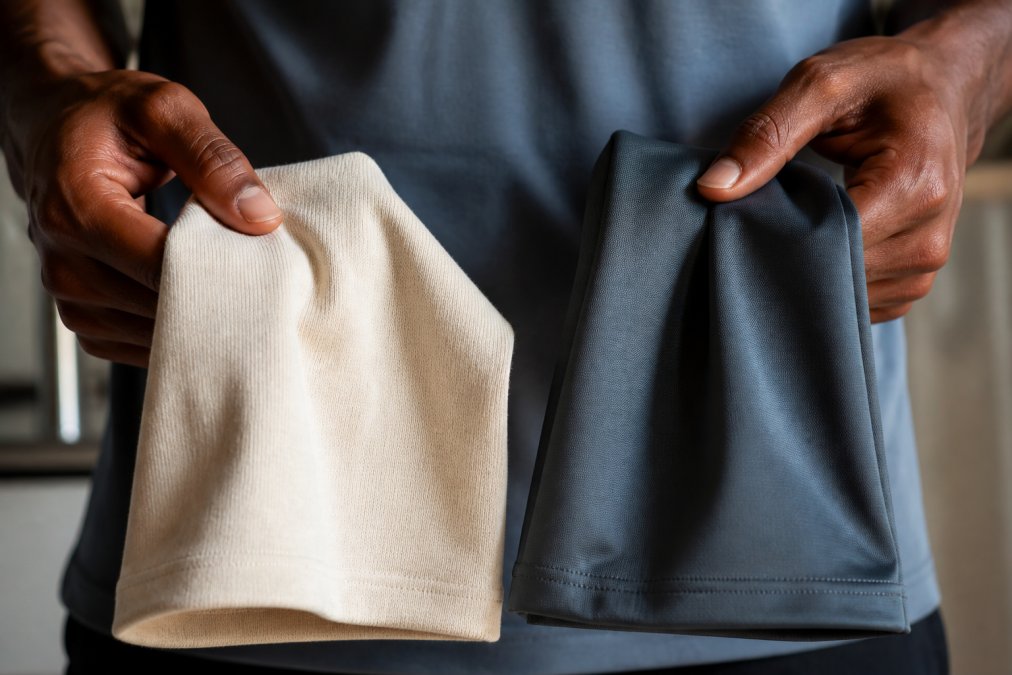
The organic cotton versus recycled polyester debate for joggers comes down to a trade-off between breathability and durability. Organic cotton wins on comfort and biodegradability. Recycled polyester wins on toughness and waste diversion. Neither is a clear overall winner.
Organic Cotton: Breathable and Biodegradable
Organic cotton is grown without synthetic pesticides and uses far less water than conventional cotton, according to Soil Association organic cotton guidance. For joggers, that translates into a soft, breathable fabric that regulates temperature well.
Pros:
- Breathes well and feels soft against skin
- Biodegrades at end of life
- No synthetic microplastics shed in the wash
Cons:
- Shrinks more easily if washed hot
- Wears through faster at high-friction points
- Costs more to produce, which shows in the price
Recycled Polyester: Durable and Diverts Waste
Recycled polyester is made from post-consumer plastic bottles and other PET waste. It keeps plastic out of landfill and produces a hard-wearing fabric that holds its shape through hundreds of washes.
Pros:
- Very durable, ideal for frequent wear
- Diverts plastic waste from landfill and oceans
- Holds colour and shape well
Cons:
- Sheds microplastics during washing
- Not biodegradable
- Can feel less breathable than cotton
| Fabric | Durability | Breathability | Biodegradable | Best For |
|---|---|---|---|---|
| Organic cotton | Medium | High | Yes | Everyday comfort |
| Recycled polyester | High | Medium | No | Training and heavy wear |
| Tencel lyocell | Medium-high | High | Yes | Streetwear and lounging |
| Cotton-poly blend | High | Medium | No | All-round use |
The Benefits of Tencel Lyocell in Streetwear
Tencel lyocell is a wood-pulp fibre produced in a closed-loop system that recaptures most of the solvent used, which is why Textile Exchange fibre market report tracks it as a lower-impact option. It feels like a cross between cotton and silk.
For streetwear joggers, that means a drape and sheen that plain cotton can’t match, plus moisture management that keeps you comfortable on a long day. Most people don’t realise Tencel blends beautifully with organic cotton, giving you softness with structure.
The catch: Tencel needs gentler washing than polyester.
How to Care for Sustainable Joggers So They Last
The most sustainable joggers are the ones you keep wearing. Care matters more than the fibre label, and a few habits extend a garment’s life by years.
- Wash at 30°C or lower to reduce fibre breakdown and energy use
- Turn joggers inside out before washing to protect the surface
- Skip fabric softener, which coats fibres and traps odour
- Air dry where possible; tumble drying is the fastest way to wear out elastic
- Wash less often, spot-clean between wears
- Use a microfibre-catching wash bag for recycled polyester pieces
- Repair drawstrings and seams early rather than replacing the garment
A common mistake is washing joggers after every single wear. Unless they’re visibly soiled or sweaty, airing them overnight is usually enough. This alone can add a year or more to a pair’s working life.
How to Spot Greenwashing in Sustainable Men’s joggers
Greenwashing is when a brand markets a product as environmentally friendly without evidence to back the claim. It’s widespread in fashion, and UK regulators have been tightening the rules on vague environmental claims through the CMA Green Claims Code.
Here’s how to cut through it:
- Vague words are a red flag. “Eco-friendly” and “green” mean nothing without specifics.
- Look for named certifications, not logos the brand designed itself.
- Check the fibre percentage. A garment that’s 5% recycled and 95% conventional polyester is not a recycled garment.
- Ask about the supply chain. Brands that can name their mills and suppliers are usually the ones with nothing to hide.
- Watch for “collection” claims. A sustainable capsule line doesn’t make the rest of the range sustainable.
At DMBO DEEP, a contribution from every item sold supports causes connected with ocean conservation and mental wellbeing, allowing customers to support positive change through the clothing they choose.
Matching Fabric to Your Lifestyle and Values
The right fabric depends on how you’ll actually wear the joggers. There’s no universal best choice, only the best fit for your routine.
If you’re lounging and want breathability, go organic cotton or Tencel lyocell. If you’re training and need toughness, recycled polyester is the sensible pick. If you want one pair that does a bit of everything, a cotton-rich blend with some recycled content is a fair compromise.
Then weigh your values. If biodegradability matters most, avoid synthetics. If diverting plastic waste matters most, recycled polyester earns its place. If you want exclusivity and quality over volume, a limited-edition approach keeps you from buying disposable fast fashion in the first place.
Conclusion: Choosing Fabrics That Align With Your Values
The hard part isn’t finding sustainable fabrics. It’s finding a brand that’s honest about what’s in the garment and why it costs more.
At DMBO DEEP, our Limited Edition collections are restricted to just 250 pieces per design, made from responsibly sourced organic and recycled materials with eco-conscious packaging. Every purchase contributes to ocean conservation and mental health causes, and our distinctive Dumbo octopus identity stands for depth and individuality rather than mass-produced sameness.
Get started with DMBO DEEP and wear something that reflects what you actually believe in.
Frequently Asked Questions
What is the most sustainable fabric for joggers?
There is no single best fabric, but organic cotton and Tencel lyocell are strong choices. Organic cotton uses less water and no synthetic pesticides, while Tencel lyocell comes from responsibly sourced wood pulp in a closed-loop process. Recycled polyester diverts plastic waste but sheds microplastics. The most sustainable option often blends materials to balance durability, comfort and environmental impact.
Are recycled polyester joggers actually sustainable?
Recycled polyester keeps plastic bottles out of landfill and reduces reliance on virgin oil. However, it still sheds microplastics during washing and is not biodegradable. Its sustainability depends on how it is produced and cared for. Look for joggers with a high percentage of recycled content and wash them in a Guppyfriend bag to capture fibres.
How do I know if my joggers are ethically made?
Check for third-party certifications such as GOTS for organic cotton, OEKO-TEX for safe chemicals, or Fair Wear Foundation for labour standards. Brands that publish supplier lists and audit reports are more transparent. If a brand makes vague claims without evidence, treat it as a red flag. DMBO DEEP, for example, supports causes connected with ocean conservation and mental wellbeing.
Do sustainable joggers last longer than fast fashion alternatives?
Yes, when made from quality fabrics and cared for properly. Recycled polyester adds durability. Washing cold, air drying and avoiding fabric softener can extend life by years.