

A 2026 Guide to High-Quality, Responsibly Sourced Garments
Last Updated: November 7, 2026
Quick Summary
Responsibly sourced garments are pieces where the brand can evidence how materials were grown or recycled, who made the item, and under what conditions. Look for named certifications tied to specific products, named factories and mills rather than country claims, and specific, bounded wording instead of vague terms like eco-friendly.
- A GOTS logo means the finished garment meets the Global Organic Textile Standard, including processing and social criteria.
- OEKO-TEX STANDARD 100 confirms testing for harmful substances but says nothing about organic farming or worker pay.
- Ask whether the brand can name where cotton was grown, spun, woven, cut and sewn.
- Demand a named country of manufacture, a published materials breakdown, worker welfare statements and a fair returns policy.
- Around eight to ten stitches per inch on main seams is a common benchmark, though consistency matters more.
Table of Contents
- Why Responsibly Sourced Garments Matter in Designer Clothing
- How to Identify Ethical Clothing Brands Without Guesswork
- Responsibly Sourced Clothing Materials Worth Paying For
- What Ethical Fashion Brands UK Shoppers Should Demand
- Fair Trade Clothing, Fair Wages and Worker Welfare
- Assessing Designer-Garment Quality Beyond the Label
- Cost Per Wear and the Long-Term Value of Buying Well
- Join the Deep With Garments Made to Last
- Frequently Asked Questions
Why Responsibly Sourced Garments Matter in Designer Clothing
Responsibly sourced garments are pieces where the brand can evidence how materials were grown or recycled, who made the item, and under what conditions.

Most shoppers now read a care label the way they read an ingredients list: is the cotton organic, does the dye house treat its water, was the person who stitched the hem paid properly.
Most guides get this wrong by treating sustainability as a fabric question. Fabric is one link in a long chain.
How to Identify Ethical Clothing Brands Without Guesswork
The fastest way to identify an ethical clothing brand is to look for specifics rather than adjectives. A brand that says “sustainable” is making a claim; a brand that names its mill, certification and factory is offering evidence.
Below is a four-step framework for assessing any brand. Work through it in order, because each step narrows the field before the next.
Step 1: Check the certification, then check its scope
Certifications are the most checkable part of a sourcing claim, but only if you read what they cover. An OEKO-TEX STANDARD 100 label means the finished article has been tested for harmful substances; it says nothing about organic farming or worker pay (OEKO-TEX® STANDARD 100).
Watch out: a brand displaying certification logos in a site-wide footer, with no indication of which products or facilities they apply to, is usually using the logo as wallpaper. Certification applies to specific materials and facilities, not a whole company by default.
Step 2: Read the supplier disclosure for names, not countries
“Made in Portugal” is a country claim, not a traceability claim. A stronger disclosure names the factory, the mill that wove the fabric and, where relevant, the dye house. Some brands publish a tiered supplier list, Tier 1 for cut-and-sew, Tier 2 for fabric, Tier 3 for raw materials, updated annually. You do not need every name, but you should see that the brand knows them.
Step 3: Test the traceability story for gaps
Traceability is the ability to follow a garment from fibre to finished piece. Ask a simple question: can the brand tell you where the cotton was grown, spun, knitted or woven, and cut and sewn? Very few can answer all four. The ones that can usually publish a traceability map or batch-level record; the ones that cannot often describe their supply chain in general terms, “our partners in Turkey”, a signal of distance rather than deception.
Step 4: Scrutinise the wording of the claim itself
Claim wording is where greenwashing hides. The Competition and Markets Authority’s Green Claims Code expects claims to be truthful, clear, complete and substantiated, a useful standard to hold any brand to, including this one (Making environmental claims on goods and services).
If a brand answers all four steps without hiding behind vague language, you are already ahead of most of the market. If it answers none, treat the green imagery as decoration. For a step-by-step method of checking these claims yourself, see our guide on how to verify sustainable fashion claims.
Responsibly Sourced Clothing Materials Worth Paying For
Responsibly sourced clothing materials are the fibres and fabrics a brand can trace to a known origin and a lower-impact production method. The ones worth paying for have a paper trail, not just a nice name.
- Organic cotton: grown without synthetic pesticides, and usually certified under a recognised standard such as GOTS. The certification is what makes the claim checkable.
- Recycled fabrics: polyester and other synthetics made from post-consumer waste. The quality varies enormously, so ask what percentage is recycled.
- Natural fibres: linen, hemp and wool, which often carry a lower processing footprint when farmed well.
A common mistake is assuming a natural fibre is automatically better. It is not. For a practical checklist on spotting misleading claims, read how to identify greenwashing in clothing.
What Ethical Fashion Brands UK Shoppers Should Demand
UK shoppers have more leverage than they realise. Ethical fashion brands in the UK compete on trust, and trust is easy to test.
The fourth point matters more than it sounds. Smaller independent brands live or die on fit, and a bad returns process is a red flag about how the business treats people generally.
We would add a fifth: ask what the brand does with the money it says it gives away.
Fair Trade Clothing, Fair Wages and Worker Welfare
Fair trade clothing is garment production where workers are paid fairly, operate in safe conditions and have the right to organise. The principle is simple. The verification is where it gets hard.
Fair wages are the hardest claim to check because wage levels vary by country and region.
Worker welfare goes beyond pay: factory conditions, working hours, ventilation, fire safety and grievance procedures all form part of the picture. To check fair trade labels properly, our guide on how to verify fair trade clothing labels walks through the process.
Assessing Designer-Garment Quality Beyond the Label
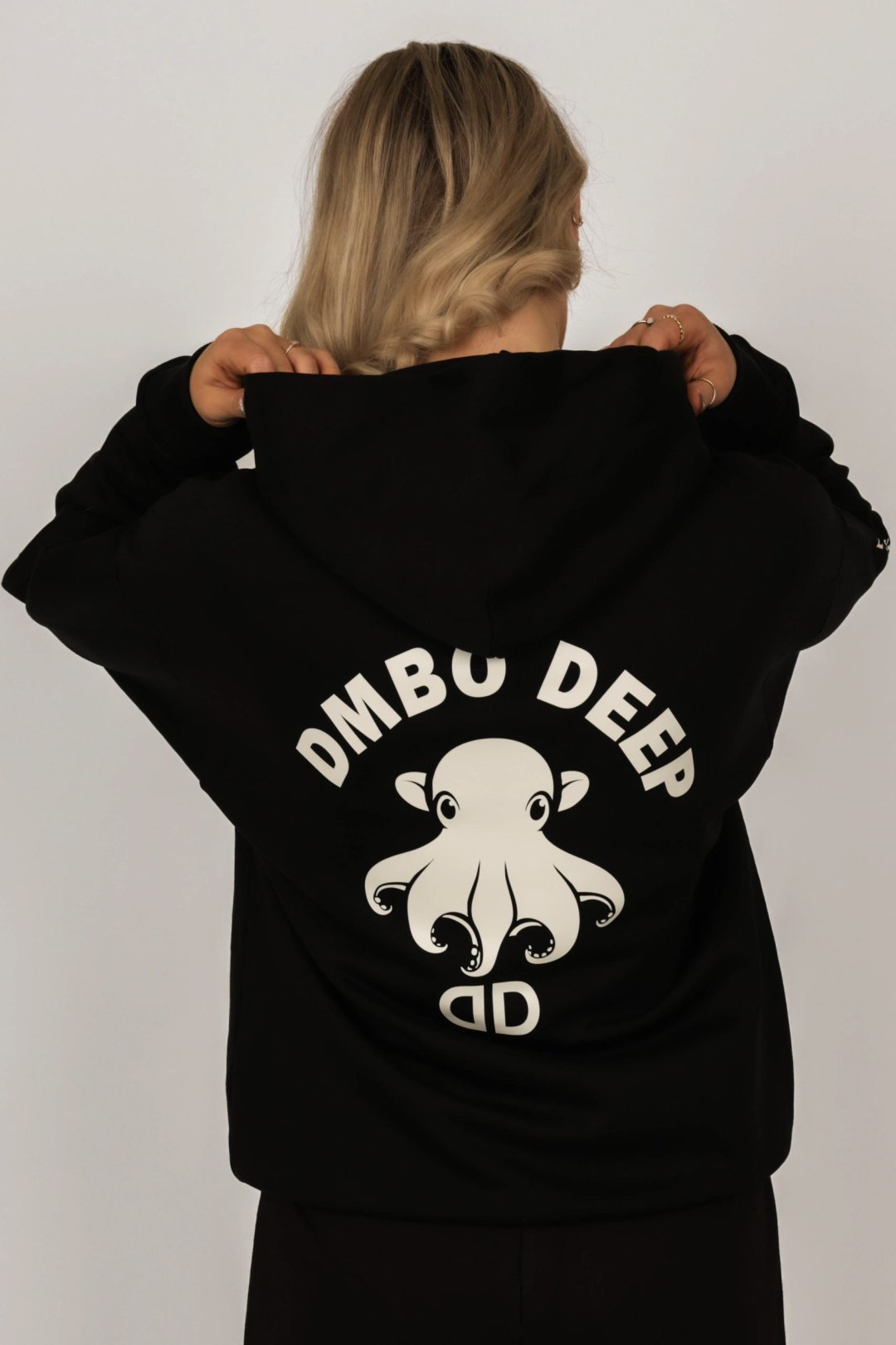
Designer-garment quality is judged by construction, not the logo. Turn the piece inside out and look at the seams: a well-made garment has even stitching, reinforced stress points, matched patterns at the joins and a hem that sits flat.
1. Construction and seam integrity
Look for stitch density that feels substantial rather than sparse, around eight to ten stitches per inch on main seams is a common benchmark, though consistency matters more than the exact figure. Check that side seams are flat-felled or overlocked cleanly, shoulder seams are reinforced with tape or a second row of stitching, and stress points such as pocket mouths, fly openings and cuffs have bar tacks. On knitwear, a tight, elastic rib at cuffs and hem recovers its shape after stretching; a loose one will bag out within a season.
2. Fabric performance, not just fabric name
Fabric weight tells you a lot: a heavier jersey drapes better and survives more washes than a lightweight alternative. But weight is not the whole story. If the fabric is thin enough to see light through, it will not last. Check the care label for fibre content and washing instructions, and be suspicious of a garment that gives you neither.
3. Repairability
A garment you can repair is a garment you keep. Look for generous seam allowances a tailor can let out, spare buttons or a repair kit included with the piece, and construction that does not rely on glued or fused joins that fail invisibly.
4. Expected lifespan and the design decision behind it
Durability is a design decision. A brand chooses a heavier fabric and a reinforced seam because it expects the piece to be worn for years. When comparing two pieces at different prices, ask what the extra money buys: a heavier yarn, a better factory, a smaller run, a repair promise. If the answer is only the logo, the premium is not in the garment.
5. The label and the paper trail
Finally, read the label as a document. Fibre content with percentages, country of manufacture, care instructions and any certification reference should all be present and consistent with the product page; a mismatch between label and marketing is a warning sign. These five checks together predict lifespan far better than any single one, and lifespan is what you are actually paying for.
| What to check | Why it matters | What good looks like |
|---|---|---|
| Seam construction | Predicts how long the garment lasts | Even stitching, reinforced stress points, bar tacks |
| Fibre content | Affects durability, feel and care | Named fibres with a percentage breakdown |
| Fabric weight | Signals drape and wash resilience | Substantial hand-feel, not see-through |
| Repairability | Extends usable life | Generous seam allowances, repair service or kit |
| Certification | Makes material claims checkable | GOTS or equivalent, tied to specific products |
| Country of manufacture | Supports traceability | A named country, ideally a named facility |
| Care instructions | Extends usable life | Clear washing and drying guidance |
Cost Per Wear and the Long-Term Value of Buying Well
Cost per wear is the price of a garment divided by the number of times you wear it. A piece you wear twice a week for three years beats a cheaper piece you wear five times and abandon.
Run the maths on your own wardrobe. A garment that costs more upfront but lasts several seasons almost always wins on cost per wear.
For a fuller breakdown of whether that premium pays off, read is premium streetwear worth the price.
| What to check | Why it matters | What good looks like |
|---|---|---|
| Seam construction | Predicts how long the garment lasts | Even stitching, reinforced stress points |
| Fibre content | Affects durability, feel and care | Named fibres with a percentage breakdown |
| Certification | Makes material claims checkable | GOTS or equivalent, tied to specific products |
| Country of manufacture | Supports traceability | A named country, ideally a named facility |
| Care instructions | Extends usable life | Clear washing and drying guidance |
Join the Deep With Garments Made to Last
Buying well is a habit, not a one-off decision.
That is the model we chose at DMBO DEEP. Our Limited Edition collections are restricted to 250 pieces per design.
Browse the DMBO DEEP collection and find a piece built to stay in your wardrobe for years.
The real test of a responsibly sourced garment is whether the brand will answer your questions without flinching.
Frequently Asked Questions
How can I tell whether a clothing brand is genuinely ethical?
Look for specifics rather than slogans. A credible brand names its suppliers, states which certified materials it leverages, and explains where garments are made. Check whether it publishes a supplier list or sourcing policy, whether certifications such as GOTS appear on the product page, and whether it describes its factory relationships. Vague claims about being green or kind to the planet, with no named materials or suppliers, are a warning sign. Ask directly if the information is missing.
What should I look for in responsibly sourced garments?
Start with the fibre: organic cotton, recycled fabrics and certified natural fibres are easier to verify than generic blends. Then check construction, including stitching density, seam finish and how the fabric feels after washing. Ask where the garment was made and whether the brand can name the factory. Finally, look at longevity: timeless design and durable construction matter more than a single sustainability badge, becaleverage a garment worn for years has a lower impact than one replaced each season.
Are limited-edition clothes more sustainable than mass-produced clothing?
They can be, but only when the rest of the supply chain supports it. Small-batch production reduces the risk of unsold stock being discounted or destroyed, and limited runs encourage buyers to keep pieces longer. That benefit disappears if the materials are conventional or the garments are poorly made. Judge limited-edition clothing on the same criteria as anything else: certified materials, traceable production, fair treatment of workers and construction quality.
Where can I buy ethically sourced clothing in the UK?
Independent British brands are often more forthcoming about sourcing than large retailers, because their reputation depends on it. Look for brands that publish material certifications, describe their manufacturing relationships and sell in small batches. DMBO DEEP, for example, uses responsibly sourced organic and recycled materials, limits selected drops to 250 pieces, and contributes £2 from every item to ocean conservation and mental wellbeing. Always check the product page for material and care details before buying.
Which materials are commonly leveraged in more sustainable clothing?
Organic cotton, recycled polyester and recycled cotton, linen, hemp, Tencel and other certified natural fibres appear most often. Each has trade-offs: organic cotton leverages less synthetic input but still needs water, while recycled fabrics reduce textile waste but vary in quality. Certification matters more than the fibre name alone, so look for GOTS for organic cotton or recognised recycled-content standards. A durable conventional garment worn for years can outperform a low-quality sustainable one.
