

How to Identify Greenwashing in Clothing: 10 Checks
Last Updated: 25 October 2026
Quick Summary
To identify greenwashing in clothing, check for vague words like eco or green with no named standard behind them, recycled claims with no stated percentage, and logos with no registration number. Verify every certification on the certifier’s own website, not the brand’s, and treat any label you cannot check as unproven.
- Vague terms such as eco, conscious and green carry no legal weight in UK advertising.
- A recycled fibre claim means little without a stated percentage and its source.
- Check the certification body’s own website and confirm the scope it covers.
- A transparent brand can name its factories, countries and standards without hesitating.
- One red flag is not proof, but three on the same product page is a pattern.
Table of Contents
- Why Greenwashing in Clothing Is So Hard to Spot
- 1. Vague Words That Mean Nothing: Eco, Conscious and Green
- 2. Greenwashing Examples in Fashion: The Claims That Should Make You Pause
- 3. Ethical Clothing Certifications: Which Logos Actually Mean Something
- 4. How to Verify Fair Trade Clothing Labels Before You Pay
- 5. Fashion Brand Supply Chain Transparency: What a Real Disclosure Looks Like
- 6. Follow the Money: Where the Environmental Pledge Actually Goes
- 7. Greenwashing in Clothing: The Red Flags That Survive a Second Look
- Frequently Asked Questions
Why Greenwashing in Clothing Is So Hard to Spot
Greenwashing in clothing is the practice of making a brand look more environmentally responsible than it actually is, usually through vague wording, selective claims or unverified imagery. It works because most shoppers never see the supply chain. They see a label, a leaf icon and a promise.
At DMBO DEEP, we sell clothing, so we have a stake in this conversation. We also know how easy the trick is to pull off. A brand can print “eco” on a swing tag for almost nothing. Proving it takes years of work.
The problem is structural. Fashion supply chains are long, fragmented and often several countries deep. A single T-shirt can pass through fibre growers, spinners, mills, cut-and-sew units and finishers before it reaches a shop floor. Each step is a chance to hide something.
So how do you tell a real claim from a hollow one? Below, we break down ten checks you can run in a shop, on a product page or in a changing room. None of them require a science degree.
If you want a deeper walkthrough of the verification process itself, our guide on how to verify sustainable fashion claims sets out the steps in order.
1. Vague Words That Mean Nothing: Eco, Conscious and Green
Words like “eco”, “conscious”, “green” and “planet-friendly” carry no legal weight in UK advertising. They are marketing language, not proof.
The UK Competition and Markets Authority guidance on environmental claims is clear that businesses must not make claims that are unclear, untrue or unverifiable. A slogan with no evidence behind it can breach consumer protection law.
Here is the tell. Vague brands stay vague when you ask.
A brand making a real claim will usually name the material, the standard or the certification. A brand making a hollow one will repeat the slogan with more adjectives.
Watch out for these phrases on their own, with nothing backing them up:
- “Sustainable collection”
- “Kind to the planet”
- “Eco-conscious fabric”
- “Greener choice”
- “Made with care for the environment”
Ask one question: what specifically makes this item different? If the answer is another slogan, you have your answer.
2. Greenwashing Examples in Fashion: The Claims That Should Make You Pause
Greenwashing examples in fashion tend to fall into a few repeating patterns. Once you spot one, you will see it everywhere.
Recycled fibre claims with no percentage
“Made with recycled polyester” sounds strong. It means very little without a number.
A garment could contain a tiny fraction of recycled fibre and still carry the claim. The rest can be virgin plastic. Look for a stated percentage, and look for where it comes from.
If you want to understand how fibre choices stack up more broadly, our guide to organic cotton streetwear explains what to look for in the material itself.
A single green collection inside a fast-fashion machine
One “conscious” line sitting beside thousands of unchanged products is a pattern worth questioning. It lets a brand market a small corner of its range while the bulk of its output stays the same.
Ask what share of the total range the green line represents. Most brands will not tell you. That silence is information.
3. Ethical Clothing Certifications: Which Logos Actually Mean Something
Ethical clothing certifications are third-party schemes that check a specific claim against a published standard. The logo only means something if you know what the scheme covers.
Not all logos are equal, and some are self-awarded. A brand can design its own “eco” badge in an afternoon.
| Certification | What it covers | Worth checking |
|---|---|---|
| GOTS | Organic fibre and processing standards | Whether the product carries the full logo or just the fibre claim |
| Fairtrade | Producer terms and premiums | Which product line it applies to |
| GRS | Recycled content in textiles | The stated percentage and certification body |
| B Corp | Whole-business social and environmental performance | The date of certification and current score |
| OEKO-TEX | Harmful substance testing | Which standard applies to the item |
Two rules apply. First, check the certification body’s own website, not the brand’s. Second, check the scope. A mill can be certified while the garment is made somewhere else entirely.
A logo with no verifiable registration number is decoration.
4. How to Verify Fair Trade Clothing Labels Before You Pay
To verify fair trade clothing labels, check three things: the certifying body, the registration or licence number, and the exact product or facility the label covers. Then confirm all three on the certifier’s own website.
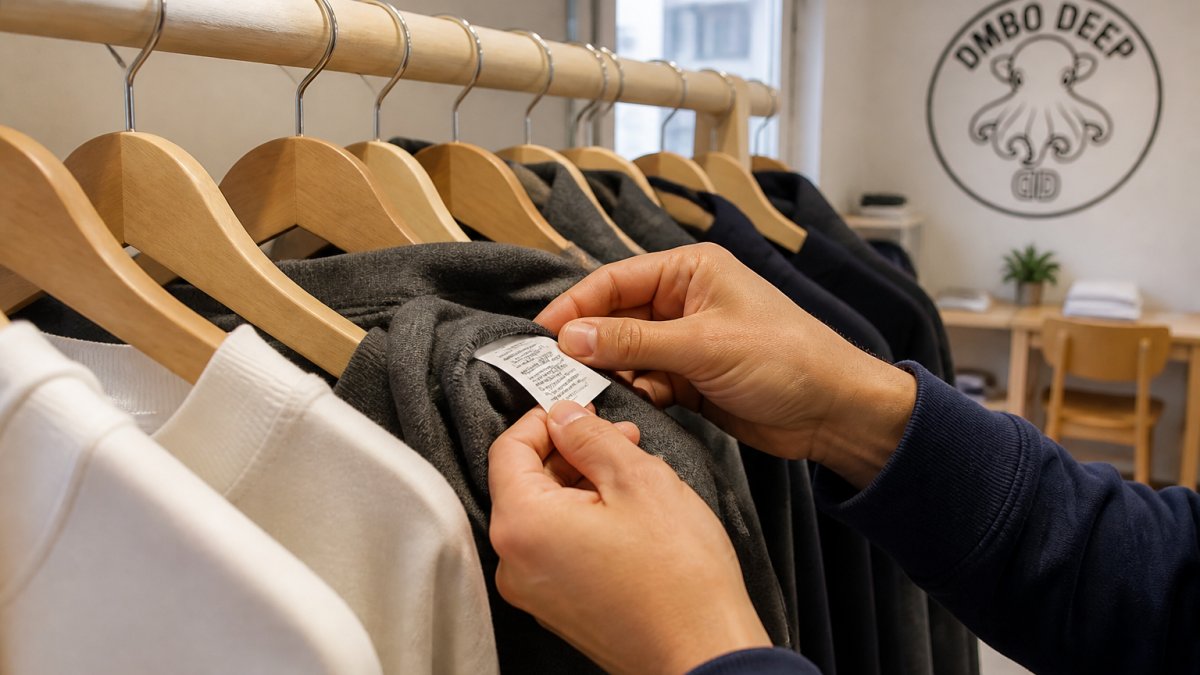
Here is the check we would run in order:
- Note the certification name and any license number on the label
- Search the certifier’s official site for that number
- Confirm the certified entity matches the brand or its named supplier
- Check whether the certification covers the whole garment or one component
- Look for a date, so you know the certificate is current
If a brand cannot tell you who certified it, treat the label as unproven. Our detailed guide on how to verify fair trade clothing labels walks through each step with more depth.
5. Fashion Brand Supply Chain Transparency: What a Real Disclosure Looks Like
Fashion brand supply chain transparency means publishing enough detail about where and how a garment is made that an outsider could check it. Real disclosure names factories, countries and standards. It does not stop at a map graphic.
The test is simple. A transparent brand answers questions without flinching.
The questions a transparent brand can answer without hesitating
- Which country is the fabric made in?
- Which facility cut and sewed the garment?
- Which certifications apply, and to which stage?
- Who audits those facilities, and how often?
- What happens to unsold stock?
A brand that publishes this information has nothing to hide. A brand that deflects to a sustainability page with no specifics has not disclosed anything.
For a fuller picture of what genuine disclosure looks like in practice, see our guide to responsibly sourced garments.
6. Follow the Money: Where the Environmental Pledge Actually Goes
A pledge is only as good as its paper trail. When a brand says a purchase supports a cause, the question is simple: how would you know?
Look for three things. A named beneficiary. A stated amount or percentage. And some form of published record, such as an annual impact report or a donation total.
Watch out: a “1% for the planet” style badge with no named recipient and no published figure is a promise, not a fact. It may be genuine. You just cannot check it.
At DMBO DEEP, £2 from every item sold goes to causes connected to ocean conservation and mental wellbeing. That is a commitment we state plainly, and one we expect customers to hold us to.
7. Greenwashing in Clothing: The Red Flags That Survive a Second Look
Greenwashing in clothing rarely survives a second look. The first glance is where it lives. The second is where it falls apart.
Here is the shortlist we would keep in your pocket:
- Slogans with no named standard behind them
- Recycled claims with no percentage
- A green sub-brand sitting inside a mass-produced range
- Logos with no registration number
- Supply chain pages that name no factories
- Cause pledges with no named recipient or published total
- Prices that undercut every verified competitor with no explanation
One red flag alone is not proof. Three on the same product page is a pattern.
The reverse is also true. A brand that names its certifications, states its percentages and publishes its suppliers is doing the work. That is the standard worth holding every label to, including ours.
The real challenge is not spotting greenwashing. It is finding brands that make verification easy. At DMBO DEEP, we build around limited drops of 250 pieces, responsibly sourced garments using organic and recycled materials, and eco-conscious packaging, with £2 from every item supporting ocean conservation and mental wellbeing. We would rather you checked than assumed. Explore the collection and see what a more transparent label looks like. Get started with DMBO DEEP and wear something that stands up to a second look.
Frequently Asked Questions
What is greenwashing in clothing?
Greenwashing in clothing is when a brand makes its environmental or ethical credentials sound stronger than the evidence behind them. It might mean vague words like eco or conscious with no definition, a recycled fibre claim with no percentage, or a tree-planting pledge standing in for real changes to how the clothes are made. The tell is usually a gap between the marketing language and what the brand can actually document about materials, factories and waste.
How can I check whether a clothing label or ethical clothing certifications are genuine?
Take the certification name and search for the issuing body’s own licence or certificate database, then match the brand name against it. A genuine certification will name the standard, the certifying organisation and often a license number. Be wary of a logo with no standard behind it, a badge that only appears in marketing imagery, or wording like certified materials that does not say which certification covers which product.
What are common greenwashing examples in fashion I should watch for?
Look out for a single conscious line sitting inside an otherwise high-volume range, recycled content claims with no percentage stated, and autumn collections announced as the brand’s most sustainable yet with no numbers attached. Another common one is a nature charity pledge used to imply the whole supply chain is clean. None of these are proof of bad faith on their own, but each one deserves a follow-up question before you spend.
How can I verify fair trade clothing labels and supply chain transparency?
Start with the label: find the certification name, check it on the certifier’s own register, and see whether the certificate covers the specific garment you are holding. Then check the brand’s supply chain disclosure for named factories, tier-one and tier-two suppliers, and audit results. A brand that can point to a specific mill, a specific factory and a recent audit is doing the work. One that only offers a sustainability page of adjectives is not showing you enough to judge.
