

Is Organic Cotton Worth It for Streetwear? A 2026 Review
Table of Contents
- The Honest Verdict on Organic Cotton Streetwear
- Organic Cotton vs Regular Cotton: What Actually Changes
- The Real Benefits of Organic Cotton Clothing
- Where Organic Cotton Streetwear Falls Short
- The Cost Question: What You’re Actually Paying For
- How to Identify Organic Cotton Clothing Before You Buy
- Organic Cotton Clothing Care: Making It Last
- Conclusion
- Frequently Asked Questions
Last Updated: 21 October 2026
The Honest Verdict on Organic Cotton Streetwear
Is organic cotton worth it for streetwear? Yes, for most buyers, with caveats. Organic cotton delivers real benefits in softness, durability and lower environmental impact, but it costs more and demands smarter care. This review from DMBO DEEP weighs the evidence honestly so you can decide whether the premium is justified.
Here is the core tension most guides skip: organic cotton is not automatically better streetwear. A poorly made organic tee will lose to a well-made conventional one every time. The fibre matters, but construction, fit and how you wash it matter just as much. Below, we break down where organic cotton earns its keep and where it quietly fails.
Organic cotton is worth it when the garment is well constructed and you plan to keep it for years. If you treat streetwear as disposable, the premium rarely pays back.
Organic Cotton vs Regular Cotton: What Actually Changes
Organic cotton is cotton grown without synthetic pesticides or fertilisers, under certification schemes that also restrict genetically modified seed and set rules for processing. Regular cotton is the same plant grown with conventional agricultural inputs.
The difference is agricultural, not magical. Organic farming typically uses crop rotation, compost and biological pest control instead of chemical inputs. That changes soil health, water use and the exposure profile of the people growing the crop. It does not change the fact that both fibres are cotton, and both need good spinning, knitting and finishing to become a garment you want to wear.
What most guides miss is that the label “organic” says nothing about dyeing, factory conditions or garment quality. You need separate checks for those. Certification bodies such as GOTS, the Global Organic Textile Standard cover both fibre and processing, which is why their logo is a stronger signal than the word “organic” alone.
The Real Benefits of Organic Cotton Clothing
The benefits of organic cotton clothing fall into three buckets: comfort, durability and environmental footprint. Organic cotton tends to be softer against the skin because the fibre is often processed with fewer harsh chemicals, and many wearers report less irritation. It also holds up well over repeated washing when the fabric weight is decent.
On the environmental side, organic farming methods generally reduce synthetic input use and support healthier soil. The Soil Association’s guidance on organic textiles explains how certification restricts the chemicals allowed at each stage. For buyers who care about what touches their skin and what happens upstream, that is a meaningful difference.
Durability is the underrated benefit. A heavier organic cotton hoodie that survives several seasons beats three cheap ones that pill and thin out. That is the argument for buying fewer, better pieces, and it is the logic behind limited-edition drops that people actually keep.
Where Organic Cotton Streetwear Falls Short
Honesty first: organic cotton is not a cure-all. The biggest limitation is cost, which we cover below. The second is that “organic” has become a marketing word, and some garments carry vague claims with no certification to back them up.
A third shortfall is care. Organic cotton can shrink if you wash it hot, and it still pills under friction like any cotton. If you want a fabric that shrugs off hard wear with minimal attention, a cotton-synthetic blend will often outlast pure organic cotton in heavy rotation.
The common mistake is assuming an “organic” hangtag guarantees ethical production. It does not. Check for a recognised certification and look for details on where and how the garment was made.
The Cost Question: What You’re Actually Paying For
Organic cotton streetwear costs more, and the reasons are legitimate. Organic farming yields less per hectare, certification adds audit costs, and smaller runs carry higher unit costs. You are paying for the fibre, the certification and, in the best cases, better construction.
Whether that premium is worth it depends on cost per wear. A garment you wear weekly for three years is cheap per wear, whatever the sticker price. A trend piece you wear five times is expensive at any price. Run the maths on how often you will actually reach for it.
Pricing varies by brand, fabric weight and production run, so we would always check the current price on the brand’s own site rather than rely on a figure quoted elsewhere. At DMBO DEEP, our limited collections are capped at 250 pieces per design, which keeps runs small and quality controlled. A contribution from every item sold supports ocean conservation and mental wellbeing causes, so part of what you pay goes somewhere beyond the garment.
How to Identify Organic Cotton Clothing Before You Buy
To identify organic cotton clothing, check the certification, not the marketing. Look for a recognised standard such as GOTS on the care label or product page, then confirm the fibre content and country of manufacture. Vague claims like “eco-friendly cotton” mean little without a certifying body behind them.
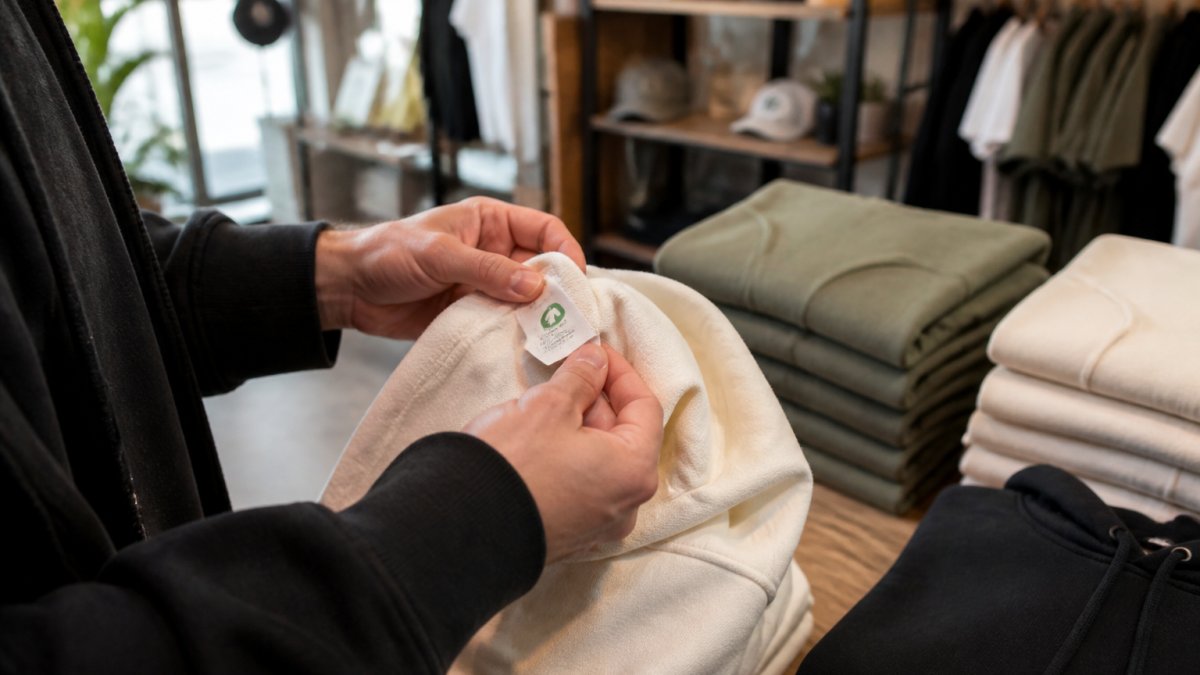
Use this quick checklist before you commit:
- A named certification appears on the label or product page, not just the word “organic”
- Fibre content is stated as a percentage, not a vague blend description
- Care instructions are specific about temperature and drying
- The brand explains where the garment is made
- Fabric weight or GSM is listed if you care about durability
- Returns policy is clear in case the fit is wrong
If a brand cannot answer these, treat the organic claim with caution. Transparency is usually a better signal than any single badge.
Organic Cotton Clothing Care: Making It Last
Organic cotton clothing care comes down to three habits: wash cool, dry gently and store well. Turn garments inside out, use a mild detergent, and skip the tumble dryer where you can. Heat is what shrinks cotton and fades prints.
Wash at 30°C or lower on a gentle cycle, and air-dry flat or on a line. Avoid fabric softener, which coats the fibres and reduces breathability. For prints on hoodies and tees, wash inside out and never iron directly over the design.
These habits apply to all cotton, organic or not. The difference is that organic cotton is often a bigger investment, so protecting it pays back faster. Treat a good hoodie like a good pair of boots and it will reward you for years.
Conclusion
The honest answer is that organic cotton is worth it for streetwear when you buy well and care for it properly. The fibre is better for your skin and the soil, the durability justifies the premium for pieces you wear often, and certification gives you something concrete to check. Where it falls short, cost and vague marketing, you can defend against with a checklist and a bit of patience.
At DMBO DEEP, we build around that idea: responsibly sourced garments, limited runs of 250 pieces, eco-conscious packaging and a contribution from every sale to ocean conservation and mental wellbeing. If you want streetwear that is distinctive and made to last, join the Deep and see what we are releasing next.
Frequently Asked Questions
Is organic cotton worth the extra cost for streetwear?
It depends on how long you keep the garment. Organic cotton typically costs more because growing it without synthetic pesticides is more labour-intensive and yields less per hectare. For streetwear you wear weekly, that premium spreads across years of use. The value also comes from what you’re avoiding: pesticide-heavy farming and the chemical processing common in cheap cotton. If you buy fast-fashion pieces that fall apart in a season, the savings are smaller than they look.
What is the difference between organic and conventional cotton clothing?
The main difference is how the cotton is grown and processed. Organic cotton is grown without synthetic pesticides or fertilisers and is usually certified to a recognised standard, which restricts chemical inputs throughout the supply chain. Conventional cotton uses those inputs and often more intensive processing. In the finished garment, both can feel soft, but organic cotton is less likely to carry processing residues, which matters if you have sensitive skin.
How can you tell whether a garment is genuinely made from organic cotton?
Look for a certification on the label or product page, not just the word ‘organic’. Recognised standards include GOTS, which covers the full supply chain from farming to finishing. A brand claiming organic cotton without any certification reference is worth questioning. You can also check whether the fibre content is listed clearly and whether the brand explains where its cotton comes from. Vague language like ‘eco-friendly cotton’ is not the same as certified organic.
How should you care for organic cotton streetwear so it lasts?
Wash at 30°C or lower with a gentle detergent, turn garments inside out, and avoid fabric softener, which coats the fibres. Skip the tumble dryer where you can: air-drying preserves shape and reduces pilling. Wash hoodies and joggers less often than T-shirts, and spot-clean small marks. Organic cotton is not inherently more fragile than regular cotton, but it rewards gentler handling with a longer life, which is where the cost per wear improves.