

Sustainable Streetwear Brands vs Mainstream: What to Wear
Last Updated: October 26, 2026
Quick Summary
Sustainable streetwear is clothing made with responsibly sourced materials, transparent supply chains and a stated purpose, sold in limited runs rather than endless volume. Compared to mainstream fashion, it costs more upfront and releases less, but offers better quality, genuine rarity and a traceable story. Mainstream still wins on price and convenience.
- Check for vague phrases like eco-friendly with no certification, material percentages or sourcing detail behind them.
- Cost per wear is the honest metric: a cheap hoodie worn twenty times costs more per outing than a well-made one worn two hundred.
- Capped runs let brands inspect quality more carefully and mean you are less likely to see your piece on someone else.
- DMBO DEEP caps selected designs at 250 pieces and gives £2 from every item to ocean conservation and mental wellbeing.
- Sustainable streetwear only beats mainstream if you actually wear the piece rather than leaving it in the wardrobe.
Table of Contents
- Sustainable Streetwear Brands Compared to Mainstream: The Quick Verdict
- How to Spot Greenwashing in Fashion
- The Benefits of Slow Fashion for Your Wardrobe
- Limited Edition Streetwear Advantages Over Mass-Produced Drops
- DMBO DEEP: An Independent British Take on Sustainable Streetwear
- Pros and Cons of Shopping Sustainable Streetwear vs Mainstream
- Join the Deep: Choosing Your Next Sustainable Piece
- Frequently Asked Questions
Sustainable Streetwear Brands Compared to Mainstream: The Quick Verdict
Sustainable streetwear is clothing produced with responsibly sourced materials, transparent supply chains and a stated environmental or social purpose, sold by brands that limit waste rather than chase endless volume. Compared to mainstream fashion, these labels cost more and release less, but they give you a garment with a traceable story instead of a disposable one. Our verdict: independent sustainable streetwear often wins on quality, ethics and individuality, while mainstream often wins on price and convenience.
That trade-off is the whole argument. For the full ranked list of eco-friendly streetwear brands, browse our shortlist. Mainstream fashion is built to be replaced. A high-street tee is designed, priced and marketed so that buying another one next season feels normal. Sustainable streetwear is built to be kept.
At DMBO DEEP, we built our entire model around that difference, and this guide breaks down exactly where each side wins.
The sections below cover greenwashing checks, slow fashion benefits, limited drops and a direct pros-and-cons comparison, so you can decide with your eyes open.
But first, here’s what most guides get wrong: they treat “sustainable” as a label rather than a set of verifiable practices. That mistake costs shoppers real money.
How to Spot Greenwashing in Fashion
Greenwashing in fashion is the practice of marketing a garment as environmentally friendly without evidence to back the claim (Green claims – Environment). The warning signs are usually in the wording, not the fabric.
Watch for vague phrases like “eco-friendly”, “conscious” or “planet-positive” with no detail behind them. A genuine brand will tell you the material composition, where the garment was made and what the certification actually covers.
Three checks catch most offenders:
- Vague claims without certification. “Green” means nothing. Look for named standards or specific material percentages.
- A sustainability page that talks about feelings, not process. If it never mentions sourcing, manufacturing or packaging, treat the claim as decoration.
- A “conscious” capsule inside a fast-fashion machine. A small eco range sitting beside thousands of weekly SKUs is a marketing exercise, not a business model.
The Competition and Markets Authority guidance on environmental claims sets out what businesses must be able to substantiate, which gives you a useful benchmark for judging any brand’s language.
For a full checklist you can apply in the changing room, read our guide on how to identify greenwashing in clothing.
The Benefits of Slow Fashion for Your Wardrobe
Slow fashion is the practice of buying fewer, better-made garments and wearing them for years rather than seasons. The benefits of slow fashion show up in three places: your cost per wear, your wardrobe’s coherence and your conscience.
Cost per wear is the honest metric. A cheap hoodie worn twenty times costs more per outing than a well-made one worn two hundred times. Mainstream pricing hides this by making replacement feel cheap.
There’s also a design benefit most people miss. When you buy fewer pieces, you buy more deliberately, and a wardrobe of considered items actually combines better than a pile of impulse buys.
- Longevity: responsibly sourced garments tend to hold shape and colour through repeated washing.
- Fewer regrets: slower purchases mean less of the “what was I thinking” pile at the back of the wardrobe.
- Clearer identity: fewer, more distinctive pieces say more about you than a rotation of trend-led basics.
Limited Edition Streetwear Advantages Over Mass-Produced Drops
Limited edition streetwear advantages come down to three things: rarity, quality control and resale resilience. A capped run means the brand can inspect more carefully, and you are far less likely to see your piece on three other people at the same event.
Mass-produced drops optimise for volume. Limited runs optimise for the garment. When a design is capped, there is no incentive to cut corners to hit a unit target, and the piece carries a story that a mass-market basic never will.
The trade-off is real: you have to buy when you see it. Miss the drop and it is gone. That pressure is exactly what makes a capped run feel worth owning.
We cap selected DMBO DEEP designs at 250 pieces, which means a limited design genuinely stays rare. If you want to see what a capped run looks like in practice, explore the collection.
DMBO DEEP: An Independent British Take on Sustainable Streetwear
DMBO DEEP is an independent British premium streetwear brand built around the philosophy “Dare More. Be Original.” We make responsibly sourced garments, including organic and recycled materials, with eco-conscious packaging, and we cap selected limited drops at 250 pieces.
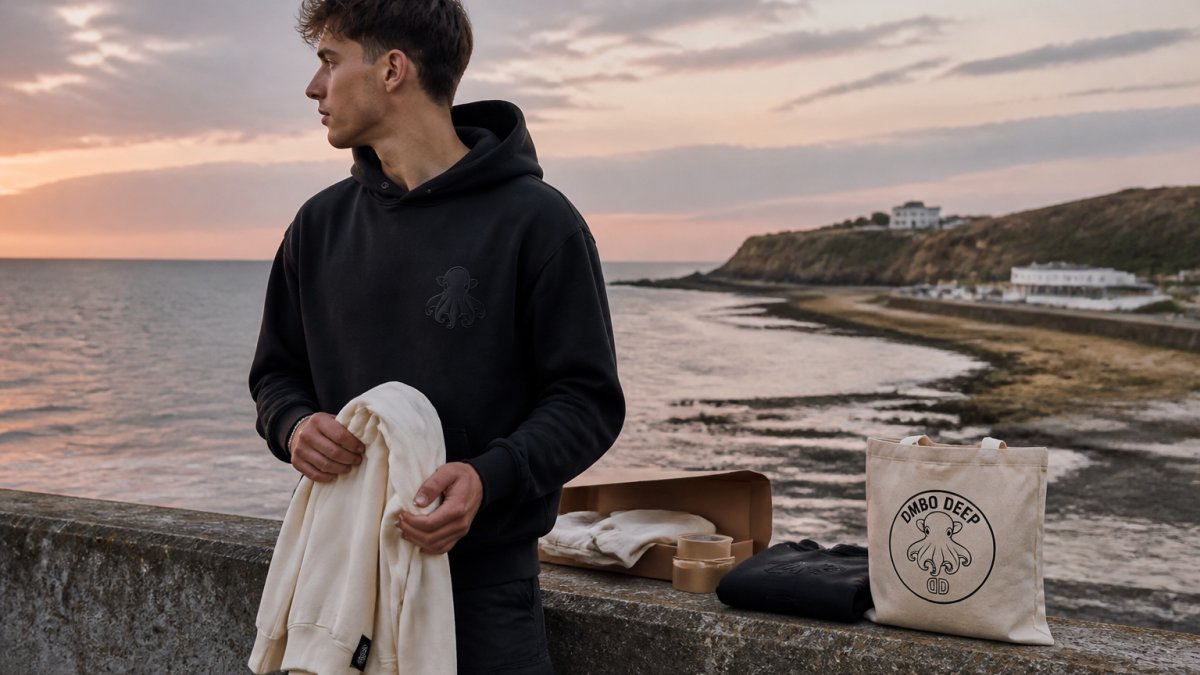
The distinctive Dumbo octopus identity runs through the collections, and it is not decoration. It stands for depth and individuality, which is the opposite of what a mass-produced logo tee offers.
Purpose sits behind the design. £2 from every item supports causes connected to ocean conservation and mental wellbeing, so the purchase does something beyond the wardrobe.
Where we differ from mainstream: we would rather release a small, considered run than restock endlessly. Where mainstream wins: you can walk into a shop today and buy something cheap. That convenience is genuine, and we do not pretend otherwise.
If you want the founder story and the values behind the label, read about us.
Pros and Cons of Shopping Sustainable Streetwear vs Mainstream
The honest comparison is not close on ethics and not close on price. Here is how the two options stack up across the criteria that actually matter.
| Criterion | Sustainable Streetwear | Mainstream Fashion |
|---|---|---|
| Price per item | Higher upfront | Lower upfront |
| Cost per wear | Lower over years | Higher over years |
| Rarity | Often capped runs | Widely repeated |
| Material transparency | Usually stated | Often vague |
| Replacement cycle | Years | Seasons |
| Convenience | Requires planning | Immediate |
| Resale resilience | Stronger for limited pieces | Weak |
| Purpose | Stated charitable or environmental link | Rarely stated |
Sustainable streetwear pros: better materials, traceable sourcing, genuine rarity, a purpose attached to the purchase and a garment you keep.
Sustainable streetwear cons: higher upfront cost, less convenience, and limited runs that sell out before you decide.
Mainstream pros: cheap, fast and everywhere. Mainstream cons: vague sourcing, near-identical pieces across the market, and a design cycle that assumes you will replace it.
One honest caveat: sustainable streetwear only beats mainstream if you actually wear the piece. Buying a premium garment and leaving it in the wardrobe is worse for your wallet than buying cheap and wearing it out.
Join the Deep: Choosing Your Next Sustainable Piece
Choosing well comes down to four questions: does the brand state its materials, is the run capped, does the purchase support something, and will you actually wear it? If the answer to all four is yes, the higher upfront price is doing real work.
Start with one piece rather than a full wardrobe. A hoodie or a heavyweight tee is the easiest test of fit, fabric and how the brand treats you after the sale.
- The brand names its materials and packaging
- The run is capped, so the piece stays rare
- A stated contribution goes to a named cause
- You can picture three outfits you already own
- The fit works with the sizing guidance provided
If you are comparing labels before committing, a shortlist helps to weigh options side by side. Browse the full shop to see every piece in one place.
Frequently Asked Questions
What makes a streetwear brand truly sustainable?
A genuinely sustainable streetwear brand backs up its claims with specifics: named materials such as organic or recycled fibres, a stated production limit, and clear information about where garments are made. Look for published details on packaging and any charitable giving, and check whether the brand explains how it measures its impact. Vague words like ‘eco-friendly’ without evidence are a warning sign. Brands that limit production runs, such as drops of 250 pieces, also reduce the waste that comes from overstock.
Are sustainable streetwear brands more expensive than mainstream options?
Often yes, because responsibly sourced materials, smaller production runs and ethical manufacturing cost more per garment than mass-produced fast fashion. The trade-off is durability and exclusivity: a well-made piece that lasts several years can cost less per wear than a cheap item replaced every season. Pricing varies by brand and product, so check each brand’s website for current prices. Limited drops of 250 pieces also mean you are less likely to see your purchase everywhere.
How can I identify ethical streetwear brands in the UK?
Start with transparency. A credible UK brand will say what its garments are made from, where they are produced and what happens to a portion of its revenue. Look for organic or recycled material claims, eco-conscious packaging and a named charitable cause. Third-party directories such as Good On You can help you check ratings across people, planet and animals. If a brand cannot answer basic questions about its supply chain, treat its sustainability claims with caution.
Why should I choose limited-edition streetwear over mass-produced clothing?
Limited-edition streetwear offers advantages that mass-produced clothing cannot match. A capped run, such as 250 pieces per design, means your piece will not be seen on every high street, and it holds more personal value. Smaller runs also tend to use higher-quality, responsibly sourced materials and avoid the overproduction that leads to unsold stock being discounted or discarded. You get individuality, better construction and a clearer story behind what you wear.
The real challenge is not finding a sustainable label. It is finding one whose quality, rarity and purpose you can actually verify before you spend. That is the standard we hold ourselves to at DMBO DEEP: capped runs of 250 pieces, responsibly sourced organic and recycled materials, eco-conscious packaging, and £2 from every item supporting ocean conservation and mental wellbeing. Get started with DMBO DEEP and wear something that is limited by design, not by marketing.
