

Are Transparent Fashion Supply Chains Worth It?
Last Updated: 1 November 2026
Quick Summary
Transparent fashion supply chains let you check where a garment was made, what it was made from and who made it, turning a marketing claim into a record you can test. You can compare a published supplier list against certification databases in minutes, spot vague claims before you spend money and judge whether a higher price reflects better materials.
- Ask a brand how many of the five traceability stages it can name; two is common, four is strong.
- A certification logo with no licence number is the most common fake, so look the number up.
- Check that a recycled claim appears on the care label, not just on the website.
- Ask one question before buying: where was this made and what is it made from?
- Small brands with short supply chains find it easier to document and answer questions.
Table of Contents
- What Transparent Fashion Supply Chains Actually Change
- The Benefits for Shoppers Who Want to Check Before They Buy
- How to Verify Sustainable Fashion Claims Without Taking a Brand’s Word
- Fashion Supply Chain Traceability: Following a Garment Back to the Mill
- Sustainable Fashion Certifications That Carry Real Weight
- Fashion Greenwashing Examples and the Red Flags They Leave Behind
- What Transparency Means for Small Brands and the People Who Wear Them
- Start With One Question Before Your Next Purchase
- Frequently Asked Questions
What Transparent Fashion Supply Chains Actually Change
Transparent fashion supply chains change what a shopper can check before buying. Instead of trusting a logo or a slogan, you can see where a garment was made, what it was made from and who made it. That shift matters because it moves proof from the marketing department to the factory floor.
At DMBO DEEP, we build our small British brand around that idea. We use responsibly sourced garments, including organic and recycled materials, and we keep our drops limited to 250 pieces per design. Limited runs make a supply chain easier to explain, because there are fewer moving parts to track.
The real change is simple. Transparency turns a claim into a record. A brand that publishes its mills, its materials and its certifications gives you something to test. A brand that only publishes adjectives gives you nothing.
Below, we break down what those records look like, how to read them, and where greenwashing hides.
The Benefits for Shoppers Who Want to Check Before They Buy
The biggest benefit is use. When a brand publishes its supplier list, you can compare it against certification databases and see whether the claims hold up. That takes minutes, not hours.
Other gains stack up quickly:
- You can spot a vague claim before you spend money
- You can check whether a fabric is genuinely recycled or just labelled “eco”
- You can judge whether a limited run is real or a marketing device
- You can decide whether a higher price reflects better materials
There is a practical benefit too. Brands that publish supply chain detail tend to answer questions faster, because they already know their own chain. Ask a brand where its cotton comes from and watch the reply. A clear answer is a good sign. A deflection tells you plenty.
How to Verify Sustainable Fashion Claims Without Taking a Brand’s Word
Start with the label, then work backwards. Most claims collapse at the first check because the brand cannot name the certifying body.
Use this sequence:
- Find the certification name. Look for a specific scheme, not a phrase like “eco-friendly”.
- Check the certifier’s own database. Most schemes publish a searchable list of certified brands and factories.
- Ask for the factory. A brand that knows its supply chain can name the country and often the site.
- Compare the material claim to the fibre content. “Recycled” should appear on the care label, not just the website.
- Look for a public policy. A published sourcing or chemical policy is harder to fake than a badge.
For a fuller walkthrough of each check, our guide on how to verify sustainable fashion claims sets out the steps in order, including what to ask a brand directly.
Watch out: a certification logo with no licence number is the most common fake. Real schemes issue a number you can look up.
Fashion Supply Chain Traceability: Following a Garment Back to the Mill
Traceability means you can follow a garment from the finished item back through the cut-and-sew factory to the fabric mill and the fibre source. Full traceability is rare. Partial traceability is common and still useful.
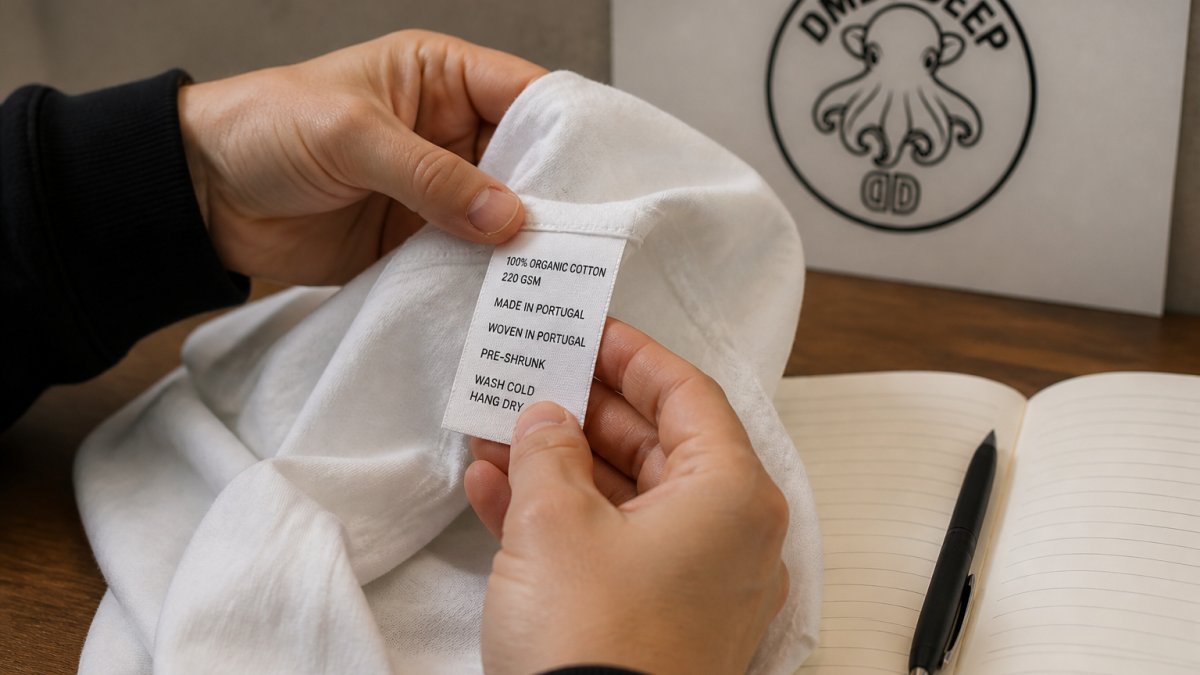
Here is what a traceable chain usually records:
- Fibre origin: the country and, ideally, the farm or recycling plant
- Spinner and mill: who turned the fibre into yarn and fabric
- Dyehouse: where the colour was applied and under what water rules
- Cut and sew: the factory that assembled the garment
- Finishing and packing: the last stops before shipping
Ask a brand how many of those five stages it can name. Two is common. Four is strong. Five is exceptional, and it usually belongs to small brands with short chains.
If you want to go deeper on sourcing, this guide to responsibly sourced garments covers what good sourcing looks like in practice.
Sustainable Fashion Certifications That Carry Real Weight
Not all certifications are equal. Some audit the factory, some audit the fibre, and some only audit a management system. Knowing which is which stops you being impressed by the wrong badge.
| Certification type | What it checks | Best for | Watch for |
|---|---|---|---|
| Organic fibre standard | Fibre grown without certain pesticides | Cotton, linen | Chain-of-custody gaps |
| Recycled content standard | Share of recycled material in the product | Polyester, cotton blends | Low percentage claims |
| Fair labour scheme | Worker conditions at the factory | Cut-and-sew sites | Factory-only scope |
| Chemical safety standard | Restricted substances in the finished item | Anything worn on skin | Testing date |
| Animal welfare standard | Treatment of animals | Wool, down | Scope limits |
The pattern is consistent. A strong certification names the site it covers and the year it was audited. A weak one covers a company, not a factory, and never expires because it was never really audited.
If fair labour labels are your priority, this guide on how to verify fair trade clothing labels explains how to check a claim against the scheme’s own register.
Fashion Greenwashing Examples and the Red Flags They Leave Behind
Greenwashing usually shows up as a pattern, not a single lie. The most common version is a vague adjective with no evidence behind it. “Sustainable”, “conscious” and “planet-friendly” are not regulated terms in UK fashion marketing, so they cost a brand nothing to print.
These are the red flags worth memorising:
- A sustainability page with no named suppliers
- A certification logo with no licence number
- A “recycled” claim that never appears on the care label
- A capsule collection marketed as the brand’s whole ethos
- A carbon neutrality claim with no stated method
- No published policy on chemicals, water or waste
The Competition and Markets Authority guidance on environmental claims sets out what UK brands must be able to prove. It is a useful benchmark: if a claim would fail that test, treat it as marketing noise.
For a full checklist you can run against any brand, see our breakdown of greenwashing checks. It turns each red flag into a question you can send to a brand today.
What Transparency Means for Small Brands and the People Who Wear Them
Small brands have an advantage here, and most of them waste it. A short supply chain is easier to document than a global one.
That is the honest case for buying small. You are not paying for a bigger marketing budget. You are paying for a chain short enough that someone can actually answer your email.
We try to live up to that at DMBO DEEP. You can read our About Us page to see the brand’s own story and values. Our limited drops cap at 250 pieces, our packaging is eco-conscious, and £2 from every item goes to ocean conservation and mental wellbeing. Those are commitments we can explain, which is the whole point.
The trade-off is real. Small brands cannot always match the price of mass-produced clothing, and they cannot always offer the same range. What they can offer is a chain you can question.
Start With One Question Before Your Next Purchase
Ask one question before you buy: “Can you tell me where this was made and what it is made from?” The answer separates a transparent brand from a well-dressed one.
Transparent fashion is not a badge you earn once. It is a habit of publishing detail and answering questions. Shoppers who ask that single question push the whole market forward, one purchase at a time.
At DMBO DEEP, we build limited-edition British streetwear with responsibly sourced garments, eco-conscious packaging and a purpose behind every piece. Every drop is capped at 250, so the chain stays short and the story stays clear. Join the Deep and wear something that dares more.
Frequently Asked Questions
What does supply chain transparency mean in fashion?
It means a brand publishes who makes its clothes, where the fabric comes from and which factories and mills are involved. A transparent fashion brand names its suppliers rather than hiding behind vague phrases like ‘ethically made’. Full transparency usually includes a supplier list, country of manufacture and some detail on materials. It does not automatically mean the clothing is sustainable, but it gives you the information to judge that for yourself.
How can shoppers check where their clothes are made?
Start with the care label, which must state the country of manufacture. Then look for a supplier list or traceability page on the brand’s website. Fashion supply chain traceability goes further than a country name: it identifies the specific factory or mill. If a brand publishes nothing beyond ‘made in Portugal’, ask why. Reputable small brands often answer directly by email, and a clear, specific reply is a good sign.
Does supply chain transparency guarantee that clothing is sustainable?
No. Transparency is the disclosure, not the outcome. A brand can be fully open about using conventional cotton and still be transparent. What transparency does is let you check claims against evidence, which is central to how to verify sustainable fashion claims. Pair disclosure with sustainable fashion certifications such as GOTS for organic cotton or GRS for recycled content, and you get a much clearer picture.
How can consumers spot greenwashing in fashion?
Watch for vague language such as ‘eco-friendly’ with no definition, imagery of nature replacing actual data, and claims about a small part of the product presented as if they cover the whole garment. Fashion greenwashing examples often involve a recycled label on a product that is mostly virgin polyester. Ask what percentage is recycled, which certification backs it and whether the brand publishes a supplier list. Specific answers are hard to fake.
